Morocco is one of those rare destinations that grabs you before you even arrive. The call to prayer drifting over rooftops at dawn, the scent of cumin and rose water in a narrow souk alley, the shock of silence when you first step into the Sahara — this country doesn’t just offer experiences. It offers transformation.
If you’re wondering what things to do in Morocco should top your travel list, you’re in the right place. This guide covers the very best Moroccan experiences, from iconic imperial cities to off-the-beaten-path valleys most tourists never find. Whether you’re a first-time visitor or returning traveler, there’s always something new to discover here.
Why Morocco Should Be Your Next Travel Destination
Few countries pack as much variety into one destination as Morocco does. It sits at a crossroads — geographically, culturally, and historically — where Africa meets the Arab world, where Berber tradition blends with French colonial architecture, and where the Atlantic crashes against ancient medina walls.
For English-speaking travelers, Morocco is also remarkably accessible. Most Western passport holders need no visa for stays up to 90 days. Direct flights connect from the US, UK, and Europe. And a well-developed tourism infrastructure means you can go as independent or as guided as you like — making the things to do in Morocco as varied as the travelers who come here.
Yet Morocco never feels flattened for tourists. The chaos of Djemaa el-Fna at night, the labyrinthine streets of Fes’s medina, the bone-dry silence of the Sahara — these aren’t performances put on for visitors. They’re just Morocco being Morocco.
Explore the Imperial Cities
Among the top things to do in Morocco, exploring its four imperial cities — Marrakech, Fes, Meknes, and Rabat — ranks highest for most travelers. Each was once a seat of royal power. Each tells a dramatically different story about Moroccan civilization.
Marrakech — The Red City
Marrakech is where most visitors begin, and for good reason. The city is intoxicating from the moment you step out of the airport. The medina, a UNESCO World Heritage Site, is a maze of pink-walled streets, hidden riads, and artisan workshops that have operated the same way for hundreds of years.
Start at Djemaa el-Fna, the main square, which transforms from a street food market by day into a circus of storytellers, musicians, snake charmers, and acrobats by night. Then lose yourself in the souks that spread northward — one street for leather goods, another for spices, another for handwoven carpets.
Don’t miss the Bahia Palace, the Saadian Tombs, and the Majorelle Garden — the electric-blue botanical garden once owned by Yves Saint Laurent.
Fes — The Spiritual Heart of Morocco
If Marrakech is Morocco’s showpiece, Fes is its soul. Founded in the 9th century, Fes el-Bali is the world’s largest car-free urban area — a medieval city that genuinely hasn’t been redesigned for modern life. Streets are barely wide enough for two people to pass. Donkeys still carry deliveries. The famous tanneries still operate exactly as they did in the 12th century.
The Chouara Tannery is unmissable — peer down from a rooftop leather shop onto a sea of stone vats filled with vivid dye, workers treading hides barefoot just as their ancestors did. The University of Al-Qarawiyyin, founded in 859 AD, is widely recognized as the world’s oldest continuously operating university. The Bou Inania Madrasa is among the finest examples of Moorish architecture anywhere on earth.
Plan at least two full days in Fes. One is never enough.
Meknes & Rabat — Hidden Imperial Gems
Meknes is often skipped, which is exactly why you should go. Built by Sultan Moulay Ismail in the 17th century with imperial ambitions to rival Versailles, the city has grand gates, vast granaries, and a medina refreshingly free of tourist crowds.
Rabat, Morocco’s modern capital, offers a completely different rhythm — relaxed, coastal, and culturally rich, with the Hassan Tower, the Royal Palace, and the beautifully restored Kasbah of the Udayas overlooking the Atlantic.
Adventure & Nature Experiences
For travelers seeking outdoor adventure, the things to do in Morocco extend far beyond city walls. The country’s landscapes are staggering in variety — snowcapped Atlas peaks, towering Sahara dunes, wild Atlantic surf, and deep desert canyons.
Sleep Under the Stars in the Sahara Desert
This is, for many travelers, the single most powerful experience Morocco offers — and possibly the most memorable of their lives. The Erg Chebbi dunes near Merzouga rise up to 150 meters, glowing orange and gold as the sun drops below the horizon. A camel trek brings you deep into the dunes at sunset, where a traditional Berber camp awaits: lantern-lit tents, sweet mint tea, a crackling fire, and a sky so loaded with stars it barely seems real.
Getting there requires either a long but spectacular drive from Marrakech (roughly 8–9 hours through the Atlas Mountains and Draa Valley) or a short flight to Errachidia. The journey itself is half the experience. → [Link: Sahara Desert Morocco Guide]
Hike the Atlas Mountains
The High Atlas is Morocco’s great outdoor playground. Jebel Toubkal, at 4,167 meters, is the highest peak in North Africa — a genuine trekking challenge that most fit hikers complete in a two-day guided trek from the Berber village of Imlil. Views from the summit stretch toward the Sahara in one direction and the Atlantic in the other.
For something less demanding, the Ourika Valley offers easy day hikes from Marrakech with waterfalls, Berber villages, and vibrant local markets. The Ait Benhaddou ksar — a UNESCO-listed fortified village and filming location for Game of Thrones and Gladiator — sits at the edge of the Atlas and is absolutely worth a detour.
Surf the Atlantic Coast
Morocco’s surf scene is one of Africa’s best-kept travel secrets. Taghazout, just north of Agadir, is a purpose-built surf village with consistent waves, laid-back café culture, and schools catering to all skill levels. Imsouane offers one of the longest rideable waves on the continent. Sidi Ifni is the destination for those craving beautiful isolation.
The surf season runs roughly October through April, with the most powerful swells arriving in winter.
Culture, Food & Souks
Some of the most rewarding things to do in Morocco have nothing to do with landmarks. Moroccan culture lives in its streets, kitchens, and markets — and engaging with it directly is what separates a good trip from a great one.
Get Lost in a Medina
Every major Moroccan city has a medina — the original walled city — and each carries a distinct personality. Getting genuinely, productively lost inside one is an experience worth planning for. Follow your nose toward a bakery. Follow the sound of hammering metalwork down an unmarked alley. You’ll find things no guidebook has listed.
The medinas of Fes, Marrakech, Chefchaouen, and Essaouira are all UNESCO World Heritage Sites and each rewards extended exploration on foot.
Take a Moroccan Cooking Class
Moroccan cuisine is one of the world’s great culinary traditions — tagines slow-cooked with preserved lemon and olives, couscous piled high with seven vegetables, bastilla filled with pigeon, almonds, and powdered sugar. A cooking class gives you a genuine way into this tradition.
Most classes begin at a local market, where you shop for ingredients alongside your instructor before moving to a beautiful riad kitchen to cook and eat together. It’s one of the most social, delicious, and educational Morocco activities you can book in any city.
Shop the Souks Like a Local
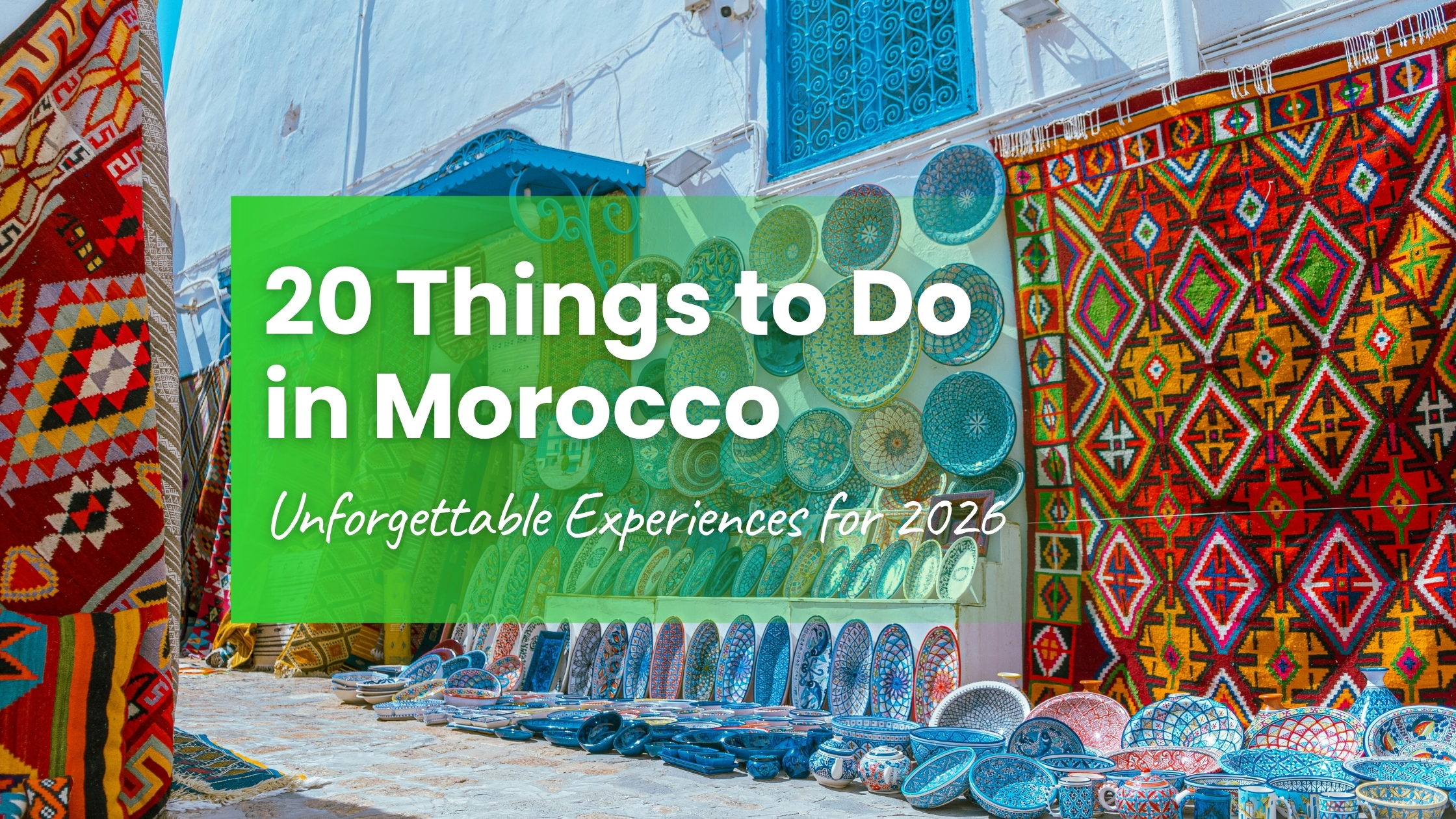
Moroccan souks are not shopping malls with roofs. They are living, breathing industries. Leather tanners, carpet weavers, copper beaters, pottery painters, woodcarvers — the goods sold here were made nearby, often by the very person selling them.
Bargaining is expected and entirely good-natured. A reasonable opening offer is roughly half the asking price, then meeting somewhere in the middle. Never bargain for something you have no intention of buying — it wastes everyone’s time and goodwill.
Coastal & Hidden Gems
Beyond the well-trodden imperial circuit, some of the best things to do in Morocco are found in quieter corners of the country.
Explore Chefchaouen, the Blue City
Tucked into the Rif Mountains of northern Morocco, Chefchaouen is the most photogenic town in the country — possibly in all of North Africa. Its medina is painted in dozens of shades of blue: cobalt, powder, navy, sky. The reason for the blue remains debated, but the effect is completely undeniable.
Chefchaouen moves at its own pace. Cats outnumber tourists on quiet mornings. Cafés spill into painted alleyways. The surrounding mountains offer rewarding day hikes.
Relax in Essaouira
Essaouira is Morocco‘s great escape valve — a wind-swept Atlantic port town of white walls and blue shutters that has attracted artists, musicians, and wanderers since the 1960s. The old ramparts overlook a wild sea. The medina is calm by Moroccan standards. The seafood, grilled fresh at the port, is extraordinary.
It’s also the wind capital of Africa, making it a world-class destination for kite-surfing and windsurfing enthusiasts.
Discover the Draa Valley & Todra Gorge
The drive south from Marrakech through the Draa Valley — past date palms, ancient kasbahs, desert oases, and vast open plains — ranks among the most beautiful road trips on earth. The Todra Gorge, a dramatic narrow canyon with walls rising 300 meters above a shallow river, is a stunning detour and a destination in its own right for rock climbers.
These southern landscapes feel genuinely ancient and quietly extraordinary.
Practical Tips for Visiting Morocco
Best time to visit: March–May and September–November offer the most comfortable temperatures. Summers are very hot inland; winters can be cold in the mountains.
Getting around: Trains connect major cities (Marrakech, Casablanca, Rabat, Fes, Tangier) efficiently. CTM buses cover longer routes. For the south and mountains, hiring a private driver or joining a tour is usually the best option.
Currency: Moroccan Dirham (MAD). Cash is king in medinas and smaller towns.
Language: Arabic and Tamazight (Berber) are official languages. French is widely spoken. English is increasingly common in tourist areas.
Safety: Morocco is one of Africa’s safest tourist destinations. Standard urban precautions apply — watch for pickpockets in crowded souks and be firm but polite with persistent touts.
Dress code: Dress modestly outside of beach resorts, particularly in medinas and religious sites. This applies to all genders.
Is Morocco safe for solo travelers?
Yes, Morocco is considered safe for solo travelers including solo women. Exercise normal urban caution, dress conservatively, and trust your instincts. Many solo travelers rate it among their best experiences.
What is Morocco most famous for?
Morocco is most famous for the Sahara Desert, its medinas and souks, Moroccan cuisine, the blue city of Chefchaouen, and its unique blend of Berber, Arab, and African cultures.
Do you need a visa to visit Morocco?
Citizens of the US, UK, EU, Canada, and Australia do not require a visa for stays up to 90 days. Always confirm with your local Moroccan embassy before traveling.
What is the best city to visit in Morocco for first-timers?
Marrakech is the classic starting point for its accessibility, intensity, and range of experiences. Pairing it with Fes and the Sahara creates an ideal first-time Morocco itinerary.
Ready to Experience Morocco?
Morocco doesn’t reveal itself all at once. It gives you pieces — a perfect tagine, a rooftop sunset over a medina, a night in the desert that quietly changes something in you. The best things to do in Morocco are the ones you stumble into just as much as the ones you plan.
Start planning your Morocco trip today!