
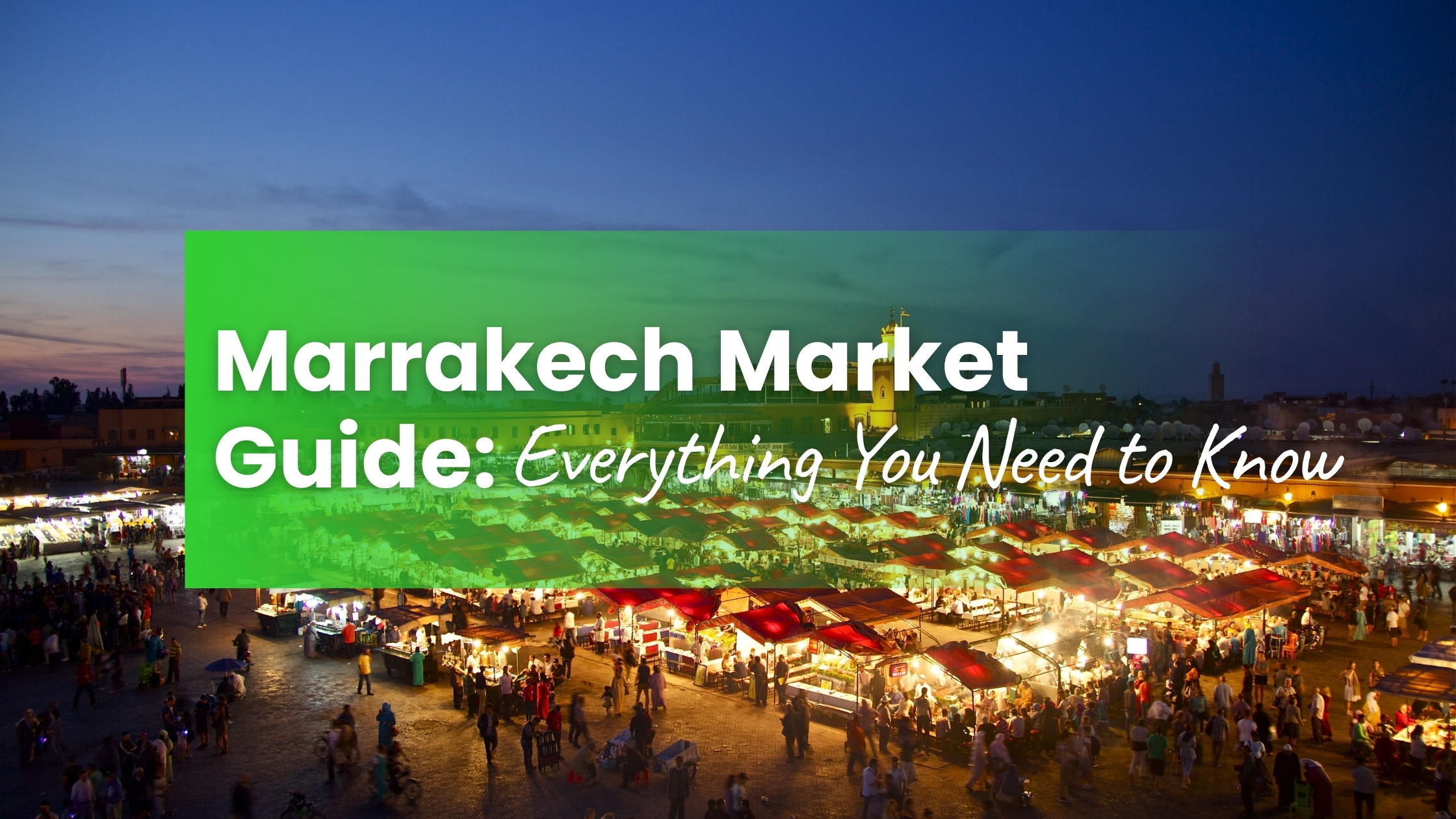
You smell it before you see it — cumin, rose water, leather, and wood smoke drifting through narrow stone alleys. Welcome to the Marrakech market: one of the most intoxicating, disorienting, and rewarding shopping experiences on the planet. The markets in Marrakech Morocco are unlike anything else in the world.
Whether you’re a first-time visitor trying to navigate the Marrakech market without getting hopelessly lost, or a seasoned traveler hunting for the perfect hand-knotted rug, this guide covers everything you need to know about the market in Marrakech Morocco — from the iconic marketplace to the overlooked hidden gems.
I’ve spent months exploring every corner of the Marrakech medina, bargaining at the Marrakech market place, sipping mint tea with carpet merchants, and learning which souks are worth your time and which are tourist traps. Here’s everything I’ve learned firsthand.
What makes the Marrakech market so special?
The medina of Marrakech — a UNESCO World Heritage Site — is home to one of the most complex and ancient market systems in the world. The Marrakech market Morocco visitors experience today hasn’t changed dramatically in over a thousand years. These aren’t tourist trinket stalls. The souks of the Marrakech marketplace are working, breathing trade hubs organized by craft in a way that dates back to medieval Islamic city planning.
Each district of the market specializes in a particular craft: dyers here, blacksmiths there, perfumers on one lane, saddlers on the next. Walking through market Marrakech Morocco isn’t just shopping — it’s a living history lesson. The sensory overload is real, but so is the reward for those willing to explore.
Unlike modern shopping malls, every visit to the market place is different. Prices shift with the season, new artisans set up shop, and the energy of the medina changes with the time of day. That unpredictability is the magic.
The famous Marrakech markets you absolutely must visit
There are dozens of distinct zones within the broader Marrakech market. Here are the ones that should be on every visitor’s list when exploring markets in Marrakech Morocco.
Jemaa el-Fna Market Square
The market place to end all marketplaces. By day, orange juice vendors, snake charmers, and henna artists crowd this legendary square. By night, Jemaa el-Fna transforms into a vast open-air food market with dozens of smoking grills, storytellers, and musicians. This is the epicenter of Marrakech market life — arrive at dusk for the full spectacle, and use it as your navigation anchor point for exploring the wider souk network.
The Spice Souk (Rahba Kedima)
Just off the main market trail lies this open square filled with pyramids of saffron, cumin, paprika, and dried rose petals. Vendors in this section of the market Marrakech Morocco also sell traditional apothecary items: argan oil, kohl, ras el hanout blends, and exotic herbal remedies. This is the most photogenic corner of markets in Marrakech Morocco, and the aromas alone are worth the detour.
Leather Souk & Chouara Tannery
Follow the smell of dye and hide to find the legendary leather quarter — one of the most visited parts of the market. The Chouara Tannery, visible from surrounding terrace shops, is one of the oldest leather markets in the world, still using traditional methods: pigeon dung softening and natural plant dyes. Watch the workers treading hides in stone vats, then browse the leather goods in the market stores below — bags, babouches, belts, and jackets at every price point. You’ll be handed a sprig of mint to counter the smell; accept it gratefully.
The Carpet Souk
Arguably the most elaborate buying ritual in the entire market circuit. Merchants in this part of the market Marrakech Morocco are masters of hospitality — expect mint tea, an elaborate carpet unrolling ceremony, and prices that require serious negotiation. Look for genuine Beni Ourain wool rugs and Kilim-style Berber pieces. Always check for natural vs. synthetic dyes by wetting a small corner and blotting with white cloth before committing.
Jewelry & Metalwork Quarter
The souk des Bijoutiers is one of the most dazzling sections of the Marrakech market, glittering with silver Berber jewelry, hand-engraved brass trays, and hammered copper lanterns. This Marrakech market place corner is where you find those iconic Moroccan pendant lamps. Look for hand-hammered work over machine-made pieces — the imperfections are the point, and they’re the mark of an authentic Marrakech market artisan.
Hidden markets in Marrakech Morocco most tourists miss
Beyond the main circuit of the Marrakech market, savvy visitors seek out these less-crowded spots that reveal the authentic soul of market Marrakech Morocco:
Mellah Market (Jewish Quarter)
Located near the Royal Palace, the Mellah quarter hosts a lively daily Marrakech market focused on fresh produce, dried fruits, olives, and household goods. Few tourists make it to this section of markets in Marrakech Morocco, which means zero tourist pricing and a genuinely local atmosphere. The covered grain and spice market near Place des Ferblantiers is particularly beautiful and completely untouristy.
Marché des Épices (Spice Market Square)
Not to be confused with the main spice souk, this smaller Marrakech market square is lined with cafes above and vendor stalls below. It’s a quieter, shadier corner of market Marrakech Morocco — ideal for browsing woodwork, ceramics, and textiles without the pressure of the main Marrakech market thoroughfare.
For the most authentic experience of markets in Marrakech Morocco, venture into the Bab Doukkala neighborhood or walk toward Sidi Bel Abbes. These residential areas have neighborhood markets serving locals that feel entirely removed from the tourist Marrakech market circuit.
What to buy at Marrakech market (and what to skip)
Not everything sold at the Marrakech market place represents good value. Here’s a quick guide for navigating markets in Marrakech Morocco like a smart shopper:
| Worth buying at Marrakech market | Avoid at the Marrakech market |
| Argan oil (certified) | “Pure” argan oil in plastic |
| Saffron threads only | Powdered saffron (often fake) |
| Handmade leather goods | Mass-produced “antiques” |
| Berber rugs & kilims | Acrylic carpets sold as wool |
| Hammered brass lanterns | Fossil stones (usually resin) |
| Zellige ceramic tiles | Branded goods near tourist spots |
| Hand-embroidered textiles | Electronics in the medina |
| Ras el hanout spice blend | |
| Silver Berber jewelry |
Marrakech market pro tip
For certified argan oil from the Marrakech market, visit a women’s cooperative — look for the COOPARGANE or Tifawin label. These cooperatives guarantee fair pay for Berber women and genuine product quality, something you simply cannot guarantee from a random Marrakech market stall.
How to bargain at the Marrakech market like a local
Bargaining isn’t optional in the Marrakech market — it’s expected, and refusing to engage is actually considered impolite. Every visitor to market Marrakech Morocco should know these six steps before they start shopping.
- Show genuine interest but not desperation at the Marrakech market stall. Pick up the item, examine it carefully, put it down. Curiosity, not longing.
- Ask the Marrakech market price without reacting. When the vendor quotes you — often 3–5x real value — nod politely and consider.
- Counter at roughly 30–40% of the asking price. This is standard practice across markets in Marrakech Morocco and your opening bid, not your final offer.
- Meet somewhere in the middle, around 50–60% of the original Marrakech market price, for most items. Carpets can go lower with time and patience.
- The “walking away” close is real in the Marrakech market place. Start leaving — slowly. Nine times out of ten you’ll hear a better price behind you.
- Once agreed, the Marrakech market deal is done. Honor it. Walking away after a handshake is considered very poor form across all markets in Marrakech Morocco.
Best time to visit the Marrakech market
Mornings before 11am are unquestionably the best time to visit the Marrakech market. Vendors are fresh, the light is gorgeous for photography, and the main Marrakech market crowds haven’t yet arrived. Midday in summer is brutal — temperatures in the unshaded sections of the market Marrakech Morocco can exceed 40°C.
The evening Marrakech market at Jemaa el-Fna is a completely different and equally unmissable experience. For seasonal planning of your visit to markets in Marrakech Morocco, October through April is the sweet spot — comfortable temperatures and that famous golden Moroccan light. Avoid peak festival season unless you want maximum Marrakech market crowds; Ramadan transforms the marketplace atmosphere entirely, quieter by day and explosive after iftar.
Practical tips for navigating the market place
Getting there: The Marrakech market is accessed from Jemaa el-Fna square and is best explored entirely on foot. Mopeds and donkeys share the alleys of market Marrakech Morocco — press against the wall and let them pass.
Getting lost: You will get lost in the market place. Embrace it completely. The medina’s alleys are deliberately labyrinthine. Download the maps.me app with offline Marrakech data before entering the Marrakech market — it handles the medina better than Google Maps.
Cash: Moroccan Dirhams only at the market. ATMs are available near Place Jemaa el-Fna and Bab Doukkala. Never exchange money with touts inside or near the market.
Official guides: Licensed guides (available through your riad or the tourist office near the Marrakech market square) are genuinely helpful for a first visit to markets in Marrakech Morocco. Unofficial “guides” approaching you on the street work on commission from specific market shops.
Photography at the Marrakech market: Always ask before photographing people. A simple “photo?” gesture goes a long way. Photographing the Chouara tannery from shop terraces overlooking the market leather district is expected and accepted.
FAQ: Everything about Marrakech market
What is the famous market in Marrakech?
The most famous Marrakech market area is the historic Medina, a UNESCO World Heritage site. Within the Medina, you’ll find the Souks, a labyrinth of specialized trading alleys. The most iconic entry point is Souk Semmarine, where you can find everything from intricate lanterns to colorful textiles. Each section of the market is dedicated to specific crafts, such as the leather souk or the spice market, making it the ultimate destination for authentic Moroccan culture.
What is the famous night market in Marrakech?
The Jemaa el-Fnaa square is the world-renowned night market of Marrakech. As the sun sets, this central hub transforms into a massive open-air kitchen. You’ll find hundreds of food stalls serving traditional Moroccan delicacies like snail soup, grilled brochettes, and fresh orange juice. Beyond the food, the night market is a stage for street performers, musicians, and storytellers, offering an electric atmosphere you won’t find anywhere else.
What are the best things to buy in Marrakech markets?
When shopping at a Marrakech market, look for high-quality, handcrafted goods. The best items to buy include:
Leather Goods: Hand-stitched bags, belts, and traditional babouche slippers.
Spices: Fresh saffron, cumin, and the famous Ras el Hanout blend.
Textiles: Authentic Berber rugs, silk scarves, and woven cushions.
Argan Oil: Pure, locally produced oil for culinary or cosmetic use.
Homeware: Ornate brass lanterns, hand-painted ceramics, and tagine pots.
What time does the Marrakech souk open?
Most shops in the Marrakech market begin opening around 9:00 AM and stay active until roughly 8:00 PM or 9:00 PM. However, it is important to note that many vendors close briefly on Friday afternoons for prayer. For the best experience, visit between 10:00 AM and 1:00 PM when the energy is high but the crowds are manageable. The Jemaa el-Fnaa food stalls specifically start setting up in the late afternoon and run late into the night.
Go Beyond the Marrakech Market
Want to find the most authentic corners of the Medina or escape the city for a day? Explore our curated selection of daily trips and local tours. Filter by city, duration, and interest to plan your dream Moroccan getaway.